
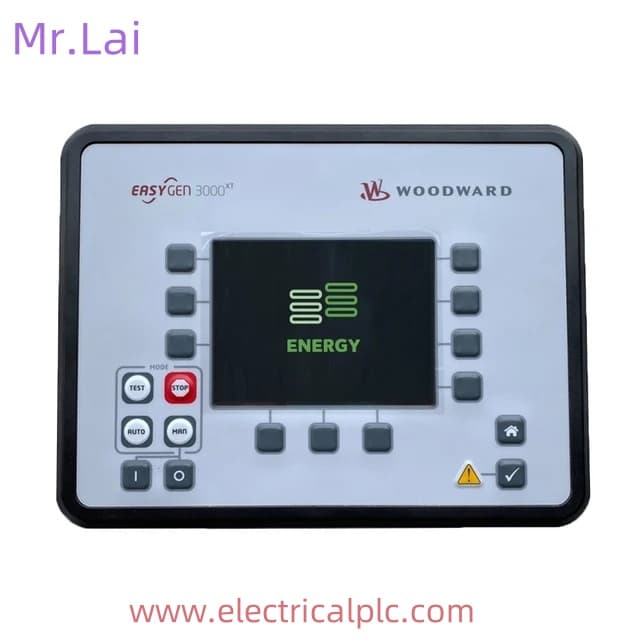
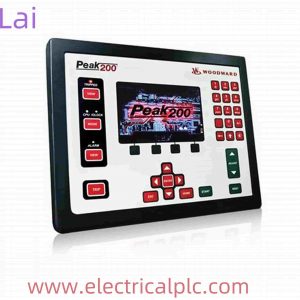
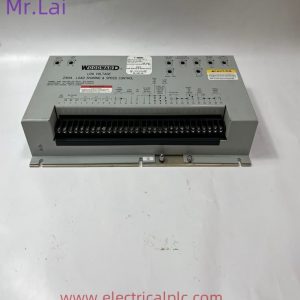
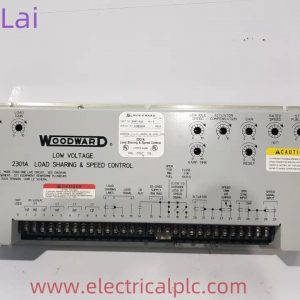
5464-428 WOODWARD Debugger unit
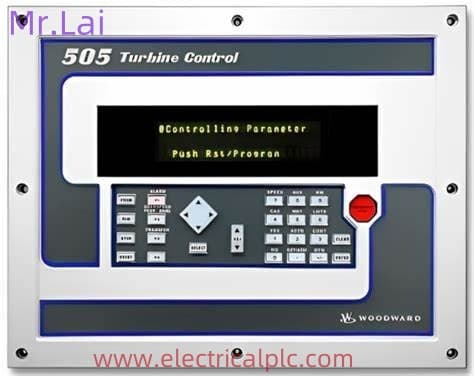
The 5464-428 is a microprocessor-based digital governor controller produced by Woodward, belonging to its classic 505 series.
It is primarily designed for speed control and protection of steam turbines. Below is a detailed introduction to this product:
I. Product Overview
- Brand and Model: Woodward 5464-428
- Series: 505 Series Digital Governor
- Type: Microprocessor-based controller
- Purpose: Specifically designed for steam turbines to control their speed and provide overspeed protection.
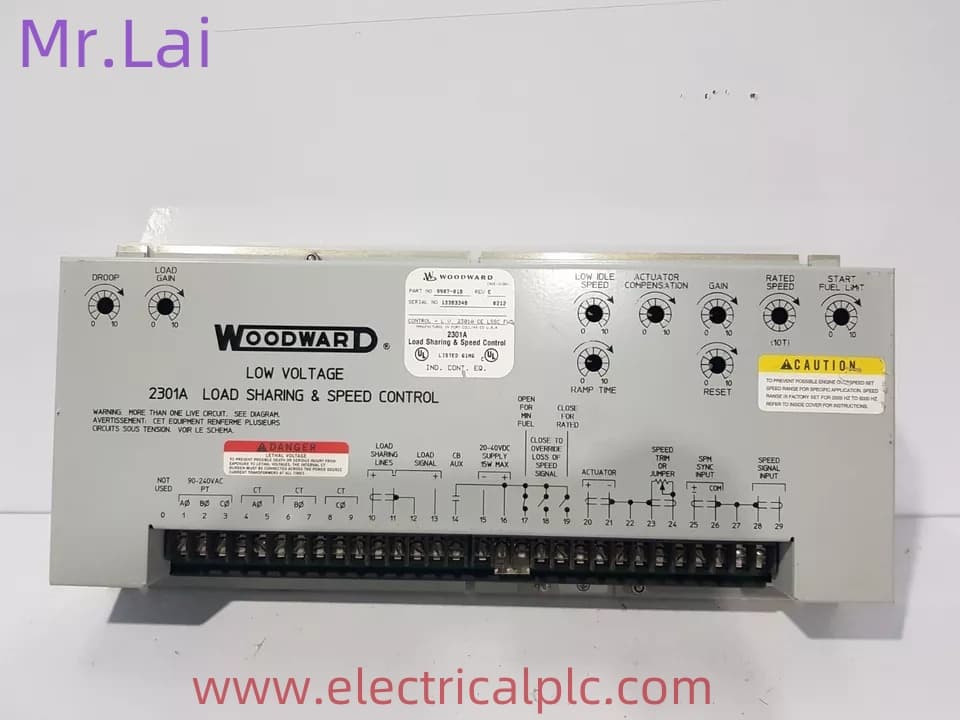
II. Core Functions
- Speed Control:
- 5464-428 Precisely controls the speed of steam turbines by adjusting steam inlet flow.
- Supports single-range or split-range actuators to accommodate turbines of different sizes.
- Overspeed Protection:
- Incorporates triple independent overspeed protection logic to ensure rapid shutdown in case of overspeed, preventing equipment damage.
- Provides an overspeed test button for convenient on-site testing of protection functions.
- Emergency Shutdown:
- Equipped with an emergency stop button for immediate shutdown in emergency situations.
- System Protection:
-
- Automatically switches control modes upon sensor failure to ensure uninterrupted system operation.
- Offers local/remote control priority selection to adapt to different operational scenarios.
-
Spending $79 to make an LED light up seems a bit luxurious. You would definitely prefer to use BASIC Stamp to create something more practical
. For over 100 dollars, you can make an exquisite digital clock! This may seem too luxurious, but in the future when making various other devices,
you will find that these components can be reused.
We will use the input and output pins of BASIC Stamp to display numbers. In the digital clock section, we learned how to connect the 7-segment
display LED of the 7447 chip. The 7447 chip can work in conjunction with BASIC Stamp. By directly connecting the four input and output pins
of BASIC Stamp to 7447, it is easy to display numbers from 0 to 9. The BS-1 version of Stamp has 8 input/output pins, which can directly drive two 7447 chips.
For a clock, at least 4 digits need to be displayed. In order to drive 4 pieces of 7447 with 8 input/output pins, we need to be more creative.
The following figure provides a solution:
In the above figure, 8 input and output pins are introduced from the left. This method uses four input and output pins to drive all four 7447s.
The remaining 4 pins are used to activate 4 pieces of 7447 in sequence (the “E” on the chip represents “Enable Enable” – pin 5 on the 7447 chip).
To make this system work, the Stamp program first sends out the first number through four data lines and sets the E pin of the first 7447 to the first control line,
thereby activating 7447. Then issue the second number to activate the second piece 7447, and repeat the activation of the four pieces 7447 in sequence. In fact,
with a slight modification of the wiring, a single 7447 can achieve these functions. By using the 74154 multiplexer chip and some drivers, up to 16 digits can be driven using this method.
This is the standard method for controlling LED display screens in practice. If you have an old-fashioned LED display calculator, observe the display screen
while shaking it. You will find that only one number is lit up at the same time. This technology is called multiplex display.
III. Technical Specifications
- Power Supply: 18-32 VDC, supporting 24VDC input.
- Display: Two-line x 24-character LED display for clear indication of operating status and parameters.
- Enclosure: NEMA 4X or IEC 60529 IP56 rated for protection against harsh industrial environments.
- Inputs/Outputs:
- Inputs: 6 programmable current inputs, 16 discrete contact inputs.
- Outputs: 2 actuator outputs, 8 relay outputs, 6 programmable current outputs.
- Communication Interfaces: 5464-428 Supports RS-232, RS-422, and RS-485 hardware interfaces for easy integration with host computers or other devices.
- Software: Equipped with OpView™ and 505View software for parameter configuration, monitoring, and fault diagnosis.
- Operating Temperature: -20 to +60°C (some models support -4 to +140°F).
- Storage Temperature: -40 to +85°C (some models support -40 to +185°F).
- 5464-428 Weight: Approximately 9.11 pounds (4.13 kilograms).
IV. Application Scenarios
- Steam Turbine Control: 5464-428Suitable for steam turbines of various sizes, including industrial steam turbines, small grid turbo-generators, and turboexpanders.
- Single Extraction and Admission Applications: Designed for operating steam turbines in single extraction and/or admission applications.
- On-Site Programming: Allows on-site operators to program and adjust parameters through an integrated operator control panel, adapting to different operating conditions.
V. Product Advantages
- High Reliability:
- Microprocessor-based design ensures precise control and stability.
- Triple independent overspeed protection logic provides multiple layers of safety.
- Flexibility:
- Supports various actuator and sensor configurations to accommodate different turbine models.
- Offers a rich set of input/output interfaces for easy system expansion and integration.
- Ease of Use:
- Two-line x 24-character LED display provides an intuitive operating interface.
- A 30-key multifunctional keyboard simplifies parameter configuration and operation.
- Compatibility:
- Supports multiple communication protocols for easy integration with DCS, PLC, and other systems.
- Provides OpView™ and 505View software for remote monitoring and fault diagnosis.
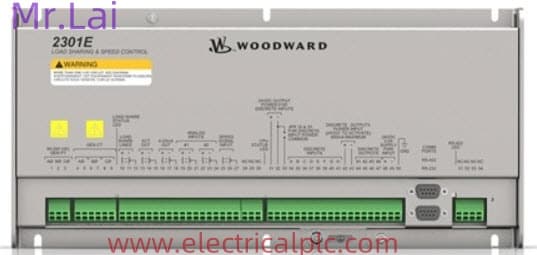
Woodward ship parts module debugger controller actuator generator set
5461-642 Woodward Ship Spare Parts,
1691-143 Woodward overspeed protector,
5464-643 Woodward Ship Spare Parts,
5439-929 Woodward turbine controller,
8256-016 Woodward turbine controller,
5464-050 Woodward ProTech 203,
5461-892 Woodward turbine controller,
5461-650 WOODWARD Debugger unit,
SPM-D11 8440-1703 Woodward Ship Spare Parts,
1766-523 Woodward turbine controller,

Reviews
There are no reviews yet.