
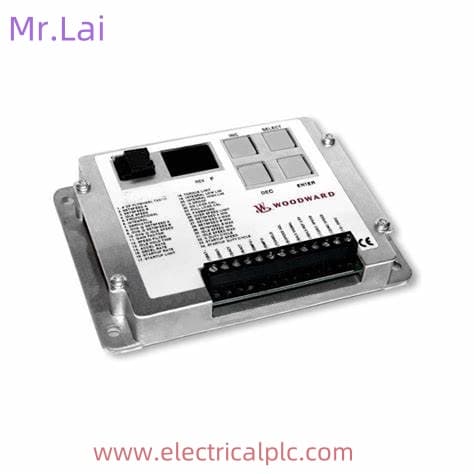
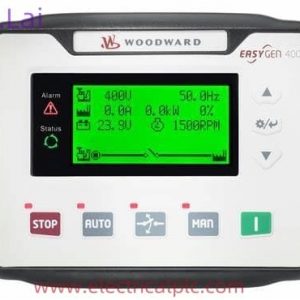
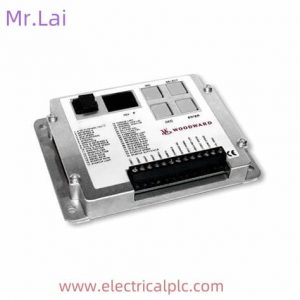
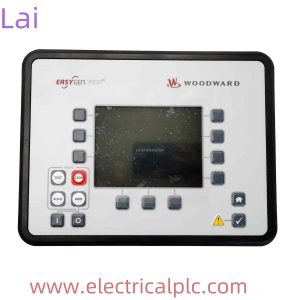
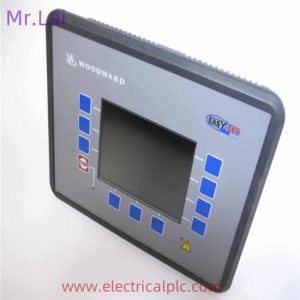
8446-1068 Woodward turbine controller
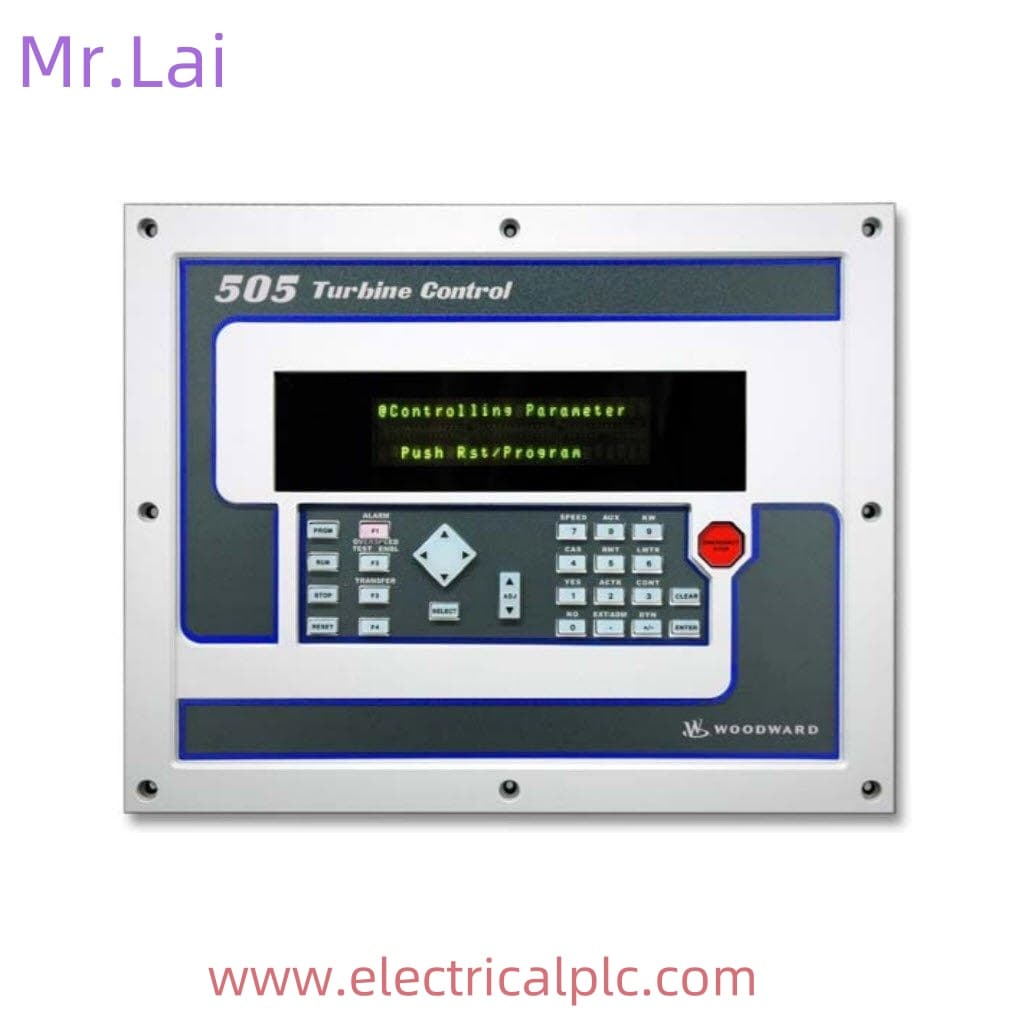
The 8446-1068 is a microprocessor-based digital governor controller produced by Woodward, belonging to its classic 505 series.
It is primarily designed for speed control and protection of steam turbines. Below is a detailed introduction to this product:
I. Product Overview
- Brand and Model: Woodward 8446-1068
- Series: 505 Series Digital Governor
- Type: Microprocessor-based controller
- Purpose: Specifically designed for steam turbines to control their speed and provide overspeed protection.
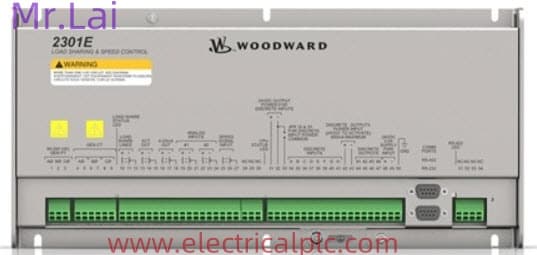
II. Core Functions
- Speed Control:
- 8446-1068 Precisely controls the speed of steam turbines by adjusting steam inlet flow.
- Supports single-range or split-range actuators to accommodate turbines of different sizes.
- Overspeed Protection:
- Incorporates triple independent overspeed protection logic to ensure rapid shutdown in case of overspeed, preventing equipment damage.
- Provides an overspeed test button for convenient on-site testing of protection functions.
- Emergency Shutdown:
- Equipped with an emergency stop button for immediate shutdown in emergency situations.
- System Protection:
-
- Automatically switches control modes upon sensor failure to ensure uninterrupted system operation.
- Offers local/remote control priority selection to adapt to different operational scenarios.
-
During the inspection, the maintenance personnel found that a power tube was damaged. However, due to a lack of information,
they could not understand the function of the tube and thought it was a power driven front push. They replaced it with a power tube
and after powering it on, the fuse was burned again, and the replaced tube was also damaged. After inspection by professional maintenance personnel,
the initial analysis was correct, that is, the fuse repeatedly melted, indicating that there must be some abnormal high current in the stepper driver,
and it was found that one power transistor was damaged. But the function of the tube is not clear.
In fact, this tube is a power drive tube for stepper motors, which start at high voltage and therefore have to withstand high voltage
and high current. Static inspection revealed that the resistance value from the power supply to the ground terminal in the circuit of the pulse ring distributor is very small,
but there is no short circuit. Based on the number of components in the circuit and their power consumption analysis, the resistance value from the power supply to the ground should not be so small,
so it is suspected that some components in the circuit have been damaged.
2. During the power on inspection, it was found that one chip was abnormally heating up. After power failure, cut off the power pin of the chip, perform static inspection,
and it should be normal for the impedance from the power supply to ground to increase. The resistance value from the power supply to ground of the chip is very small. Check the model of the chip,
it is a non-standard model and cannot be found in many manuals. After circuit analysis, it was confirmed that it is the main component in the board: the ring pulse distributor.
3. To further confirm the issue with the chip, first replace the power drive tube of the stepper motor with a voltage withstand current of equivalent power, restore the power pin of the chip,
and use a light-emitting diode circuit to replace the windings of the stepper motor as a simulated load. After power on, all the light-emitting diodes are lit up, indicating that all windings are powered on.
This does not meet the requirements of the circuit, as there is no response to the input step pulse. Therefore,
it is confirmed that the chip is damaged.
4. Solution: This chip is not available on the market. When the space inside the driver housing allows, a combination circuit was used to design a circular
pulse generator by combining the existing D flip-flop and NAND gate. The generator was fabricated on a small printed circuit board, and the original chip was removed and the small printed circuit board was
mounted on the solder pads of the original chip through pins. Still using light-emitting diodes as simulated loads, after being powered on, apply step pulses to sequentially
emit light in phase sequence. Dismantle the simulated load, connect to the host, power on, and ensure that the equipment is running normally.
5. This example illustrates that maintenance personnel not only need to be able to analyze phenomena (overcurrent) and identify obvious causes (power tube damage),
but also need to be able to analyze the initial cause of the fault step by step (pulse generator damage), and be able to use existing component combinations at hand to replace difficult to solve device problems.
III. Technical Specifications
- Power Supply: 18-32 VDC, supporting 24VDC input.
- Display: Two-line x 24-character LED display for clear indication of operating status and parameters.
- Enclosure: NEMA 4X or IEC 60529 IP56 rated for protection against harsh industrial environments.
- Inputs/Outputs:
- Inputs: 6 programmable current inputs, 16 discrete contact inputs.
- Outputs: 2 actuator outputs, 8 relay outputs, 6 programmable current outputs.
- Communication Interfaces: 8446-1068 Supports RS-232, RS-422, and RS-485 hardware interfaces for easy integration with host computers or other devices.
- Software: Equipped with OpView™ and 505View software for parameter configuration, monitoring, and fault diagnosis.
- Operating Temperature: -20 to +60°C (some models support -4 to +140°F).
- Storage Temperature: -40 to +85°C (some models support -40 to +185°F).
- 8446-1068 Weight: Approximately 9.11 pounds (4.13 kilograms).
IV. Application Scenarios
- Steam Turbine Control: 8446-1068Suitable for steam turbines of various sizes, including industrial steam turbines, small grid turbo-generators, and turboexpanders.
- Single Extraction and Admission Applications: Designed for operating steam turbines in single extraction and/or admission applications.
- On-Site Programming: Allows on-site operators to program and adjust parameters through an integrated operator control panel, adapting to different operating conditions.
V. Product Advantages
- High Reliability:
- Microprocessor-based design ensures precise control and stability.
- Triple independent overspeed protection logic provides multiple layers of safety.
- Flexibility:
- Supports various actuator and sensor configurations to accommodate different turbine models.
- Offers a rich set of input/output interfaces for easy system expansion and integration.
- Ease of Use:
- Two-line x 24-character LED display provides an intuitive operating interface.
- A 30-key multifunctional keyboard simplifies parameter configuration and operation.
- Compatibility:
- Supports multiple communication protocols for easy integration with DCS, PLC, and other systems.
- Provides OpView™ and 505View software for remote monitoring and fault diagnosis.
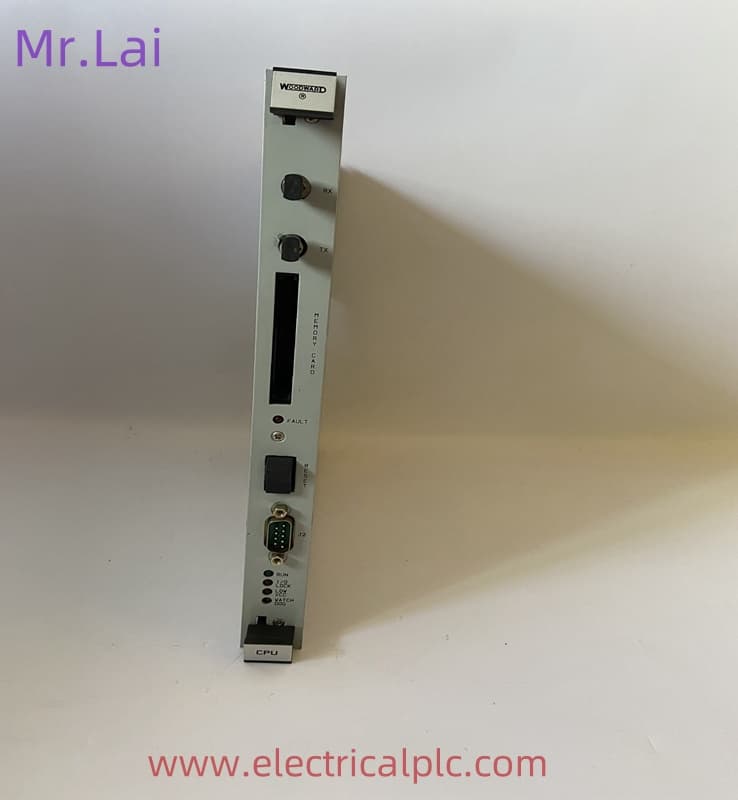
Woodward ship parts module debugger controller actuator generator set
5437-465 WOODWARD Debugger unit,
5461-290 WOODWARD Debugger unit,
8270-758 Woodward turbine controller,
5464-033 Woodward turbine controller,
3313-055 Woodward overspeed protector,
5439-760 Woodward turbine controller,
5437-860 Woodward Ship Spare Parts,
5461-086 Woodward turbine controller,
8290-191 Woodward speed control module,
8440-2088 Woodward turbine controller,
Reviews
There are no reviews yet.