
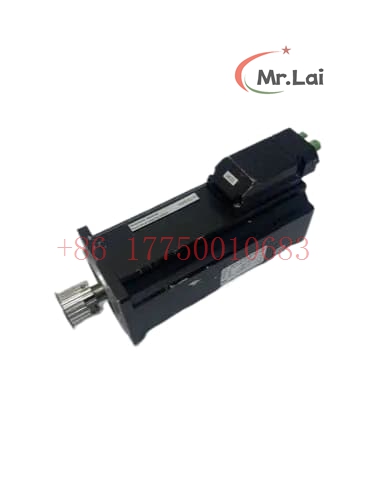
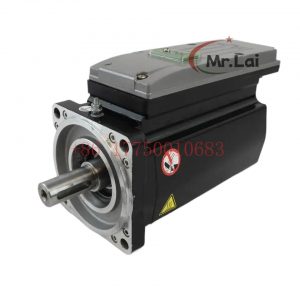
Product Overview | Schneider EALU Series SH140/30270 High Performance Servo Motor
Core Positioning:
Schneider Electric”s EALU series servo motor, model SB145/40/22/05/24/S/01/64/EAKN, is a high-precision, high-reliability drive solution tailored for industrial automation. By integrating Schneider”s advanced motor control technology with the modular EALU design,
this motor excels in scenarios demanding dynamic response, precise positioning, and long-term stability.
Model Analysis | Decoding the SH140/30270 Configuration
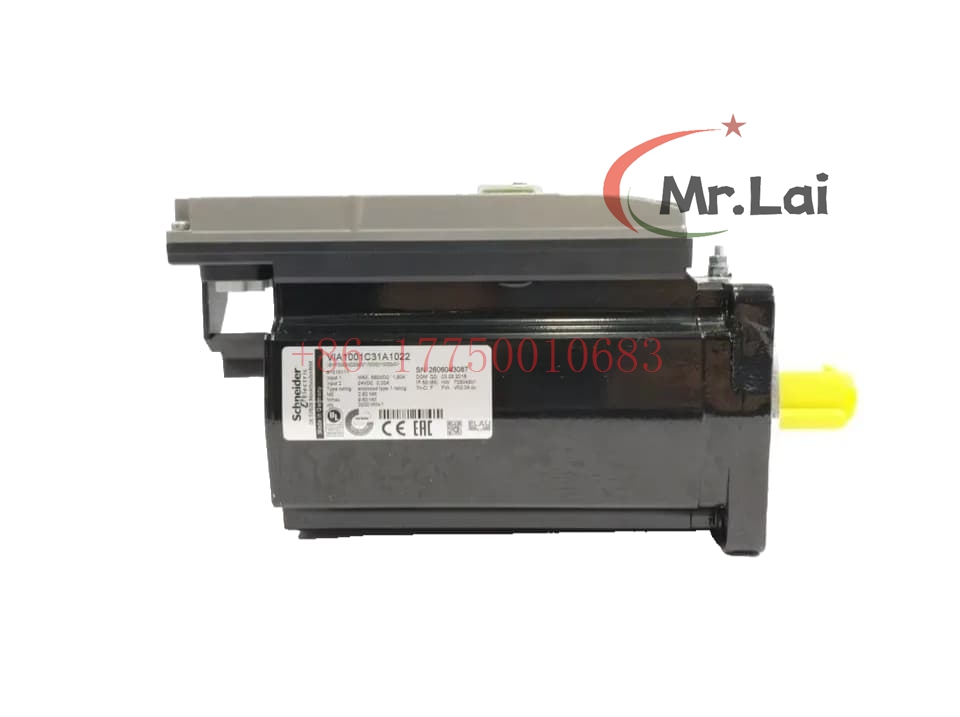
1. SB145/40/22/05/24/S/01/64/EAKN Series Designation: SH140
- Represents the medium-to-large power range, with an estimated power output of 0.75kW–3kW.
2. Core Parameter Code: 30270
This code encompasses critical specifications such as speed, torque, and encoder resolution.
For example, it may indicate:
- Rated speed: 3000 rpm
- Rated torque: 2.7 Nm
(Actual values depend on the full parameter set.)
3. Configuration Fields: 0/1/00/00/00/00/00
These digits define additional options, including but not limited to:
- Voltage level
- Protection rating (e.g., IP65)
- Communication protocol (e.g., EtherCAT, CANopen)
- Functional add-ons (e.g., brakes, oil seals).
Microstepping Control: Microstepping control is the most advanced control method for stepper motors. It achieves the rotation of the motor by controlling the magnitude and subtle changes of the current. Specifically, microstepping control controls the motor”s rotation by dividing the current into multiple different levels. Each level corresponds to a tiny angle, and by gradually changing the magnitude and direction of the current, continuous and smooth motion can be achieved. Microstepping control can provide very high resolution and precision, but it also requires more complex circuits and control algorithms.Stepper motor andservo motordifferenceStepper motors and servo motors are two common types of electric motors, and they differ inworking principle, control method, and application fields.Working principle: The stepping motor controls the rotation angle by a given pulse signal, each pulse corresponding to a fixed step angle. It is an open-loop control without a feedback mechanism to detect and correct errors. On the other hand, a servo motor uses a feedback device (such asan encoder) to detect and control the rotation angle, achieving precise position control.Control Method: The control method for a stepper motor is usually quite simple, requiring only the provision of appropriate pulse signals. However, the control of a servo motor is more complex, typically requiring the use ofPID control algorithm to perform position and velocity control based on feedback signals.Dynamic characteristics: Stepper motors are prone to step loss at high speeds, meaning they cannot accurately reach the target position, while servo motors can achieve higher speeds and accuracy.Application fields: Stepper motors are often used in applications that require positioning and precise control, such as printers, CNC machine tools and automated equipment. Servo motors are often used in applications that require high performance and highly precise control, such as robots, aerospace equipment and medical devices.In summary, stepper motors are suitable for applications that require relatively simple position control and cost-effectiveness, while servo motors are better suited for applications that demand higher performance and precise control. The choice between the two depends on the specific application requirements and budget constraints.
Technical Features | Precision Control Meets High Efficiency
1. Core Performance Parameters
Power & Torque:
- SB145/40/22/05/24/S/01/64/EAKN Rated power: Estimated 1.5kW–2.2kW (refer to selection manual).
- Rated torque: 2.7 Nm (example; actual value based on code “270”).
- Peak torque: Exceeds 3× rated torque for short-term overload demands.
Speed Range:
- Rated speed: 3000 rpm (supports high-speed light-load or low-speed heavy-load modes).
- Speed ratio: 1:5000 (stepless regulation for multi-condition switching).
Application Scenarios | Powering Industry 4.0
1. CNC Machining & Precision Tools
Typical Uses:
- Spindle drives
- Feed axis control
- Five-axis machining centers
Advantages:
- SB145/40/22/05/24/S/01/64/EAKN High rigidity and low vibration ensure surface finish quality (Ra ≤ 0.8 μm).
- Full closed-loop control eliminates mechanical errors (e.g., screw backlash).
2.. New Energy & Environmental Equipment
Typical Uses:
- Wind turbine pitch systems
- Sewage treatment agitators
- Solar tracking brackets
Advantages:
- SB145/40/22/05/24/S/01/64/EAKN Wide temperature range (-20°C to +60°C) for extreme environments.
- Corrosion-resistant coating extends outdoor lifespan.
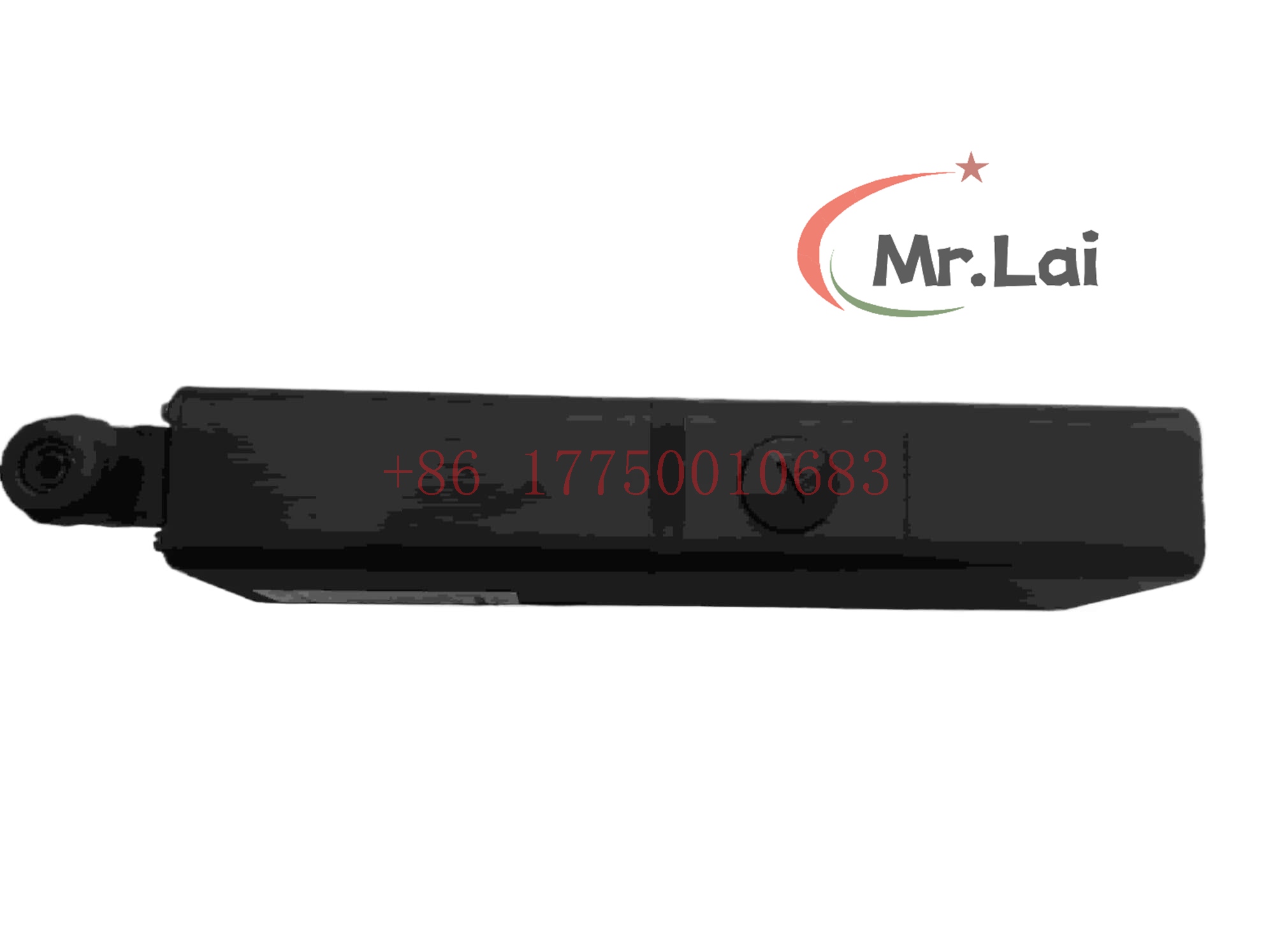
Learn More: Click here for Schneider ELAU motor details.
SH140/30270/0/0/00/00/10/01/00 | Schneider | EALU motor,
ISH100/30044/0/1/00/0/10/11/00 Advanced motor control technology,
SM100-40-050-P1-45-M1-B1 High precision, high dynamic response,
SH30551P02F2000 High precision, high dynamic response,
SH100/50030/0/0/00/00/10/00/00 High precision, high dynamic response,
SH205/20900/0/0/02/00/10/10/00 High precision, high dynamic response,
SH140/30270/0/0/02/00/00/00/00 | Schneider | EALU motor,
SH140/30120/0/1/00/00/12/11/00 Advanced motor control technology,
SH100/40060/0/1/00/00/00/00/00 Schneider Electric | Quick Delivery,
SH070/60020/0/0/00/11/00/00/00 | Schneider | EALU motor,


Reviews
There are no reviews yet.