
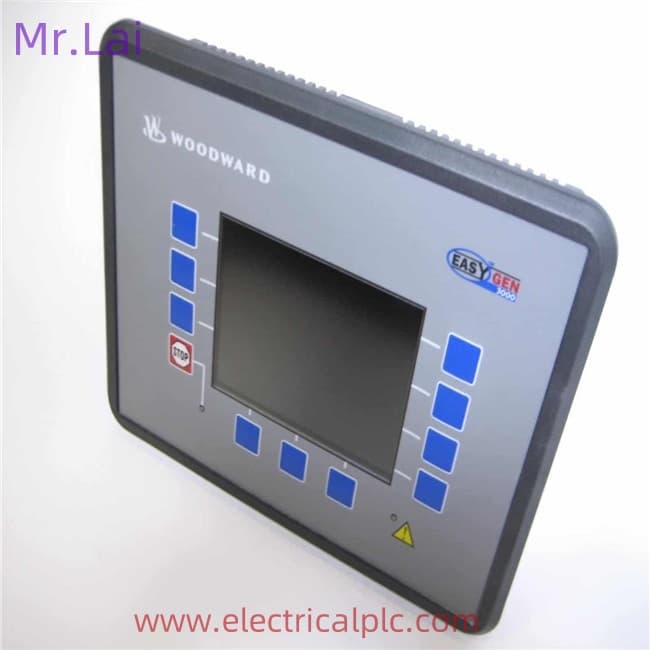
1720-707 Woodward overspeed protector
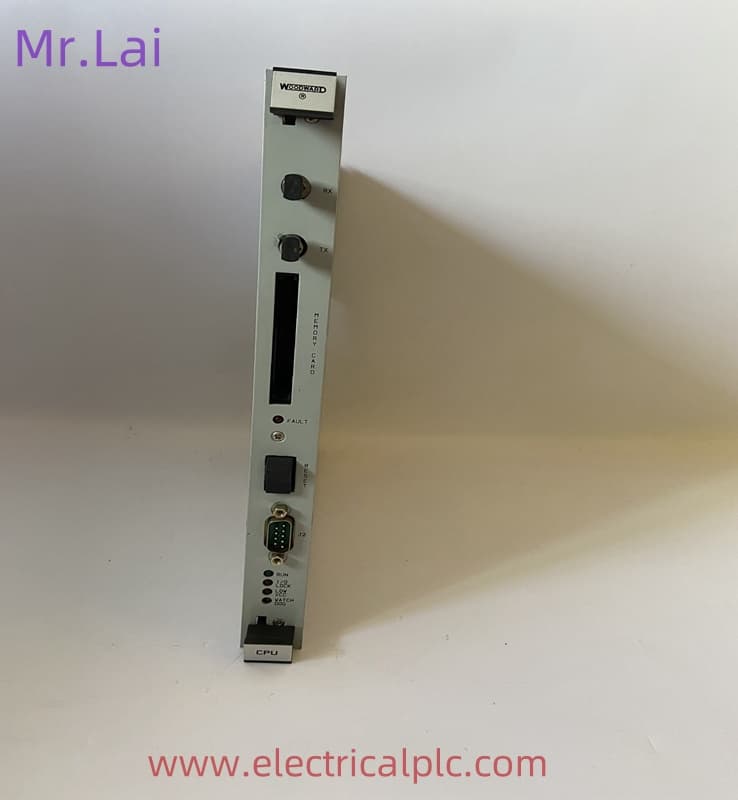
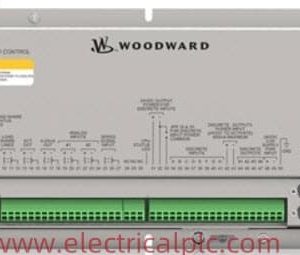
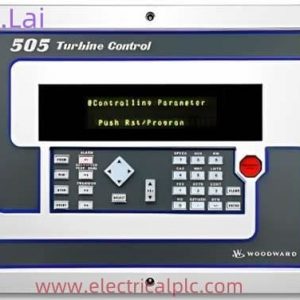
The 1720-707 is a microprocessor-based digital governor controller produced by Woodward, belonging to its classic 505 series.
It is primarily designed for speed control and protection of steam turbines. Below is a detailed introduction to this product:
I. Product Overview
- Brand and Model: Woodward 1720-707
- Series: 505 Series Digital Governor
- Type: Microprocessor-based controller
- Purpose: Specifically designed for steam turbines to control their speed and provide overspeed protection.
II. Core Functions
- Speed Control:
- 1720-707 Precisely controls the speed of steam turbines by adjusting steam inlet flow.
- Supports single-range or split-range actuators to accommodate turbines of different sizes.
- Overspeed Protection:
- Incorporates triple independent overspeed protection logic to ensure rapid shutdown in case of overspeed, preventing equipment damage.
- Provides an overspeed test button for convenient on-site testing of protection functions.
- Emergency Shutdown:
- Equipped with an emergency stop button for immediate shutdown in emergency situations.
- System Protection:
-
- Automatically switches control modes upon sensor failure to ensure uninterrupted system operation.
- Offers local/remote control priority selection to adapt to different operational scenarios.
-
In addition, computers also have some input and output devices so that they can exchange information with users. On your desktop computer,
the keyboard and mouse are input devices, while the monitor and printer are output devices. A hard drive is an input/output device – it can both input and output.
The desktop computer you are using is a “general-purpose computer” that can run thousands of various programs. Microcontrollers are specialized
computers used for special purposes. It focuses on doing one thing. Microcontrollers share many common characteristics. If a computer has most of the following characteristics,
then you can call it a “microcontroller”:
Microcontrollers are embedded within other devices (usually consumer products) to control the functionality and operation of the product. Therefore,
microcontrollers are also known as “embedded controllers”.
A microcontroller runs a specific program to accomplish a specialized task. This program is stored in ROM (Read Only Memory) and is generally not modified.
Microcontrollers are typically low-energy devices. The power plug of a desktop computer is almost always plugged into a wall socket, with a power output of approximately 50 watts.
The power of a battery powered microcontroller is approximately 0.05 watts.
Microcontrollers have a dedicated input device and typically (but not always) a light-emitting diode or liquid crystal display screen used as an output. The microcontroller
also obtains input signals from the devices it controls and controls the device by sending signals to different parts of the device.
For example, the microcontroller in a television receives input signals from a remote control and displays them on the screen. The microcontroller controls the channel selector,
speakers, and electronic adjustments such as color and brightness of the cathode ray tube. The engine controller in a car receives input signals from sensors such as oxygen and detonation,
and controls fuel mixing and spark plug timing. The microwave oven controller obtains input signals from the operation keyboard, displays outputs on the LCD screen, and controls the relay responsible for the microwave generator switch.
III. Technical Specifications
- Power Supply: 18-32 VDC, supporting 24VDC input.
- Display: Two-line x 24-character LED display for clear indication of operating status and parameters.
- Enclosure: NEMA 4X or IEC 60529 IP56 rated for protection against harsh industrial environments.
- Inputs/Outputs:
- Inputs: 6 programmable current inputs, 16 discrete contact inputs.
- Outputs: 2 actuator outputs, 8 relay outputs, 6 programmable current outputs.
- Communication Interfaces: 1720-707 Supports RS-232, RS-422, and RS-485 hardware interfaces for easy integration with host computers or other devices.
- Software: Equipped with OpView™ and 505View software for parameter configuration, monitoring, and fault diagnosis.
- Operating Temperature: -20 to +60°C (some models support -4 to +140°F).
- Storage Temperature: -40 to +85°C (some models support -40 to +185°F).
- 1720-707 Weight: Approximately 9.11 pounds (4.13 kilograms).
IV. Application Scenarios
- Steam Turbine Control: 1720-707Suitable for steam turbines of various sizes, including industrial steam turbines, small grid turbo-generators, and turboexpanders.
- Single Extraction and Admission Applications: Designed for operating steam turbines in single extraction and/or admission applications.
- On-Site Programming: Allows on-site operators to program and adjust parameters through an integrated operator control panel, adapting to different operating conditions.
V. Product Advantages
- High Reliability:
- Microprocessor-based design ensures precise control and stability.
- Triple independent overspeed protection logic provides multiple layers of safety.
- Flexibility:
- Supports various actuator and sensor configurations to accommodate different turbine models.
- Offers a rich set of input/output interfaces for easy system expansion and integration.
- Ease of Use:
- Two-line x 24-character LED display provides an intuitive operating interface.
- A 30-key multifunctional keyboard simplifies parameter configuration and operation.
- Compatibility:
- Supports multiple communication protocols for easy integration with DCS, PLC, and other systems.
- Provides OpView™ and 505View software for remote monitoring and fault diagnosis.
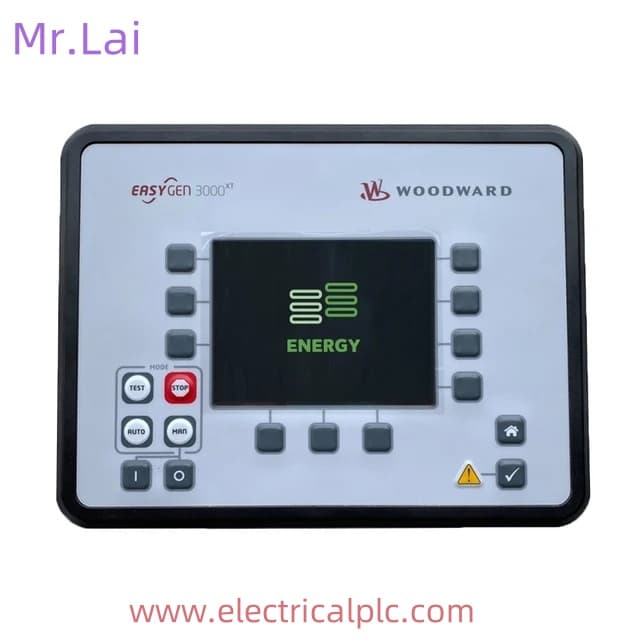
Woodward ship parts module debugger controller actuator generator set
5441-693 Woodward speed control module,
SPM-D11 8440-1706 Woodward Ship Spare Parts,
A8271-610 WOODWARD Debugger unit,
5464-439 Woodward overspeed protector,
9905-864 Woodward turbine controller,
5416-339 WOODWARD Debugger unit,
5464-338 Woodward ProTech 203,
8236-039 Woodward speed control module,
5466-340 WOODWARD Debugger unit,
5501-466 Woodward speed control module,
Power-One Power Supply 64A 24VDC SPM5D2D2KH SILICON VALLEY GROUP SVG 90S ASML
ASML ASM LITHOGRAPHY TB2500T 160MMS PCB PN 4022.436.2447 FOR PAS 25005000
ENERGY SENSOR 2
ASML 4022.636.45521 RSMR4 for Semiconductor
Philips 172100 Processor PCB Card ASML 9406.217.2100 PAS 50002500 Working
ASML PHOTO RETICLE HOLDER 4022.431.01061
ASML 4022.480.66105 Fiber Optic Light Source TWINSCAN XT:1250 System Working
ASML 4022.439.86653 IR2-FIR Solid State Laser Module ELEC-I-1743=9C
ASML LASER 4022.472.42562
SVG 99-46450-01 9200SE SVG ASML 90 track Z-robot, 23074-01-D, 110467
Asml 4022.471.6181 Blu Onda Sistemi DBV44 W2 Installati
18558 ASML MAIN SAFETY MISC RACK(MSMR) S2C-H6RU F202 4022.472.78295
Asml 4022.437.2993 8 Canal Fibre Optiques Carte Svg
ASML 4022.428.11190 Timing Control PCB Card PAS 50002500 Wafer Stepper
ASML CyberResearch SVI32 Series 90-S Millipore Pump Controller
8 Inch wafer chuck ASML SVG Silicon Valley Group wafer grindingcoati
ASML PAS 2500 STEPPER BARCODE READER 4022.430.0053
Philips PC 172110 Processor PCB Card ASML 9406.217.2110 PAS 50002500
ASML SERV.502.29124 BSM MIRROR BXP
Philips PG 2024 CPU PCB Card ASML PAS 50002500 Wafer Stepper System
Motorola MVME167-032B 33MHz Single Board Computer ASML 4022.436.8131 VME VMEBus
Reviews
There are no reviews yet.