
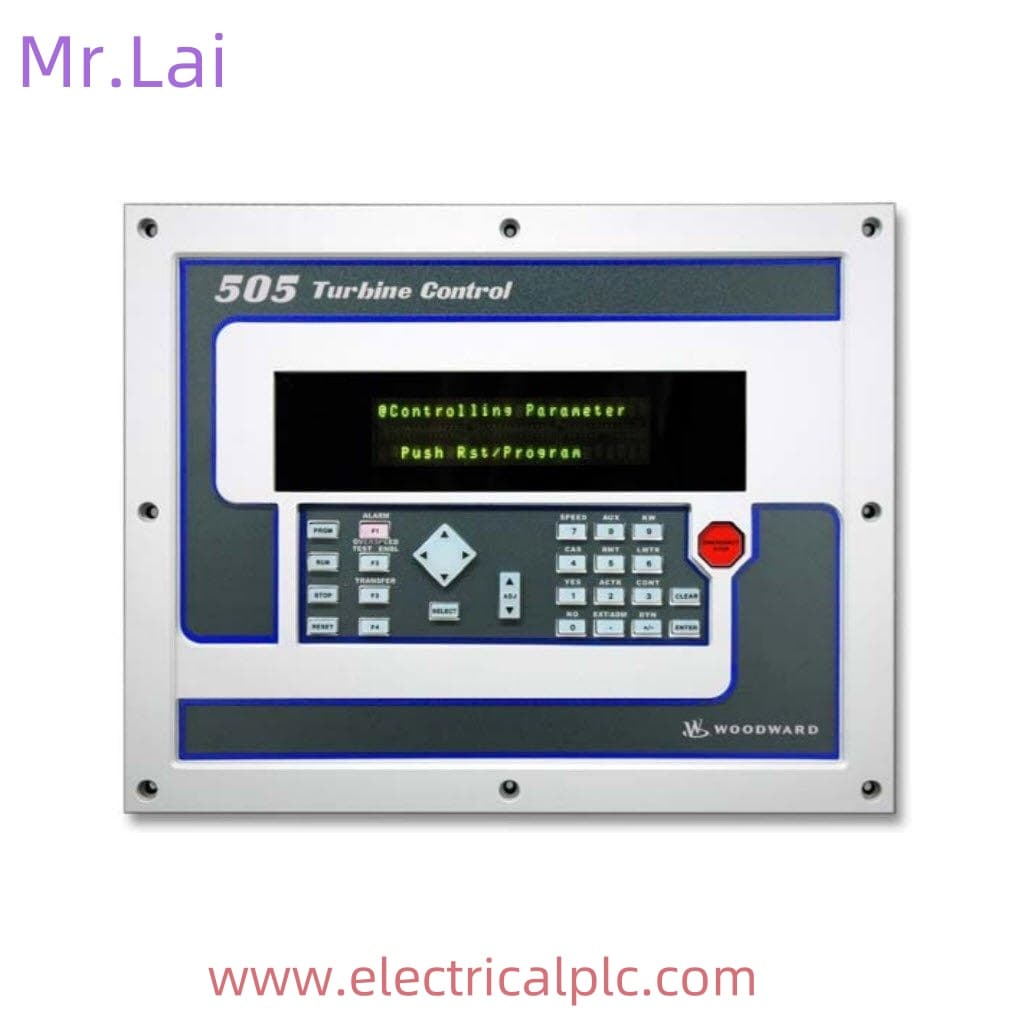
8236-026 Woodward overspeed protector
The 8236-026 is a microprocessor-based digital governor controller produced by Woodward, belonging to its classic 505 series.
It is primarily designed for speed control and protection of steam turbines. Below is a detailed introduction to this product:
I. Product Overview
- Brand and Model: Woodward 8236-026
- Series: 505 Series Digital Governor
- Type: Microprocessor-based controller
- Purpose: Specifically designed for steam turbines to control their speed and provide overspeed protection.
II. Core Functions
- Speed Control:
- 8236-026 Precisely controls the speed of steam turbines by adjusting steam inlet flow.
- Supports single-range or split-range actuators to accommodate turbines of different sizes.
- Overspeed Protection:
- Incorporates triple independent overspeed protection logic to ensure rapid shutdown in case of overspeed, preventing equipment damage.
- Provides an overspeed test button for convenient on-site testing of protection functions.
- Emergency Shutdown:
- Equipped with an emergency stop button for immediate shutdown in emergency situations.
- System Protection:
-
- Automatically switches control modes upon sensor failure to ensure uninterrupted system operation.
- Offers local/remote control priority selection to adapt to different operational scenarios.
-
For situations where low load operation time is long, or where starting and stopping are frequent, the purpose of energy saving and motor protection can be achieved. Disadvantages: The technology is complex and the price is high.
3、 Inverter motor speed regulation: Advantages: ① It has a simple structure for AC synchronous motors and good speed regulation performance for
DC motors; ② When operating at low speeds, use power supply voltage, and when operating at high speeds, use stepper motor back electromotive force for
natural commutation, ensuring reliable operation; ③ No additional slip loss, high efficiency, suitable for starting and speed regulation of high-speed and large capacity synchronous motors.
Disadvantages: Low overload capacity, and the capacity of the original motor cannot be fully utilized.
4、 Cascade speed regulation: Advantages: ① It can feedback and utilize the slip energy generated during the speed regulation process. efficient; ② The device capacity is proportional to the speed regulation range and is suitable for 70% to 95% speed regulation. Disadvantages: Low power factor, harmonic interference, no braking torque during normal operation, suitable for loads operating in a single quadrant.
5、 Stator voltage and speed regulation: Advantages: ① Simple circuit, small device size, and low price; ② Easy to use and maintain. Disadvantages: ① Increased slip loss
during speed regulation, which causes the rotor to heat up and has lower efficiency; ② The speed regulation range is relatively small; ③ Require the use of high slip motors, such as specially
designed torque motors, which have softer characteristics and are generally suitable for asynchronous motors below 55kW.
6、 Electromagnetic differential clutch speed regulation: Advantages: ① Simple structure, small control device capacity, and low value; ② Reliable operation and easy maintenance;
③ No harmonic interference. Disadvantages: ① Large speed loss, because the electromagnetic slip clutch itself has a large slip, so the maximum speed of the output shaft is only 80% to 90% of the synchronous speed of the motor;
② During the speed regulation process, all the differential power is converted into thermal energy, resulting in low efficiency.
7、 Rotor series resistance speed regulation: Advantages: ① Low technical requirements, easy to master; ② Low equipment costs; ③ No electromagnetic harmonic interference. Disadvantages:
① The series cast iron resistor can only be adjusted in stages. If liquid resistors are used for stepless speed regulation, higher maintenance and upkeep requirements will be required;
② The additional slip power during the speed regulation process is all converted into losses in the form of heat generated by the series resistor, resulting in low efficiency. ③ The speed range is not large.
III. Technical Specifications
- Power Supply: 18-32 VDC, supporting 24VDC input.
- Display: Two-line x 24-character LED display for clear indication of operating status and parameters.
- Enclosure: NEMA 4X or IEC 60529 IP56 rated for protection against harsh industrial environments.
- Inputs/Outputs:
- Inputs: 6 programmable current inputs, 16 discrete contact inputs.
- Outputs: 2 actuator outputs, 8 relay outputs, 6 programmable current outputs.
- Communication Interfaces: 8236-026 Supports RS-232, RS-422, and RS-485 hardware interfaces for easy integration with host computers or other devices.
- Software: Equipped with OpView™ and 505View software for parameter configuration, monitoring, and fault diagnosis.
- Operating Temperature: -20 to +60°C (some models support -4 to +140°F).
- Storage Temperature: -40 to +85°C (some models support -40 to +185°F).
- 8236-026 Weight: Approximately 9.11 pounds (4.13 kilograms).
IV. Application Scenarios
- Steam Turbine Control: 8236-026Suitable for steam turbines of various sizes, including industrial steam turbines, small grid turbo-generators, and turboexpanders.
- Single Extraction and Admission Applications: Designed for operating steam turbines in single extraction and/or admission applications.
- On-Site Programming: Allows on-site operators to program and adjust parameters through an integrated operator control panel, adapting to different operating conditions.
V. Product Advantages
- High Reliability:
- Microprocessor-based design ensures precise control and stability.
- Triple independent overspeed protection logic provides multiple layers of safety.
- Flexibility:
- Supports various actuator and sensor configurations to accommodate different turbine models.
- Offers a rich set of input/output interfaces for easy system expansion and integration.
- Ease of Use:
- Two-line x 24-character LED display provides an intuitive operating interface.
- A 30-key multifunctional keyboard simplifies parameter configuration and operation.
- Compatibility:
- Supports multiple communication protocols for easy integration with DCS, PLC, and other systems.
- Provides OpView™ and 505View software for remote monitoring and fault diagnosis.
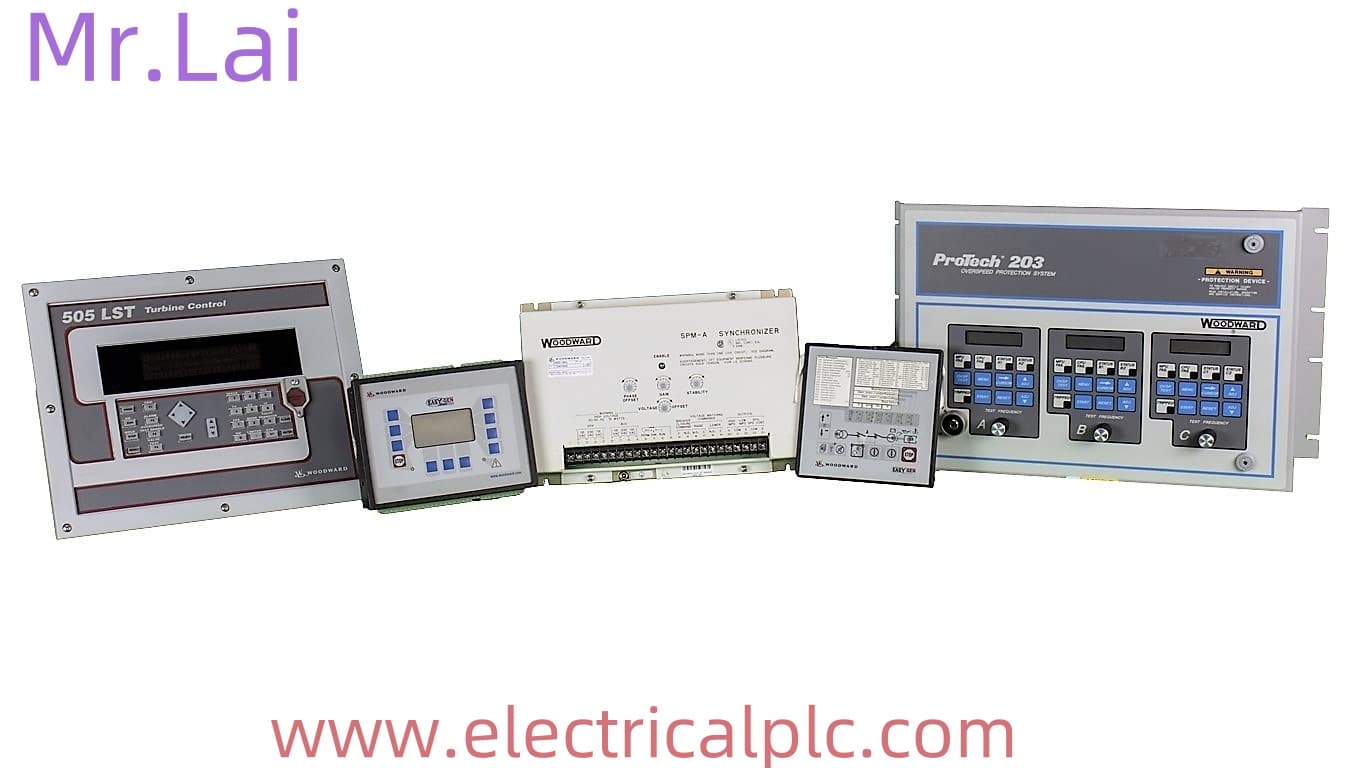
Woodward ship parts module debugger controller actuator generator set
5466-250 Woodward overspeed protector,
5403-536 Woodward overspeed protector,
5462-651 WOODWARD Debugger unit,
8440-1831 Woodward overspeed protector,
5466-318 Woodward turbine controller,
9904-261 Woodward Ship Spare Parts,
8406-113 Woodward Ship Spare Parts,
8915-046 WOODWARD Debugger unit,
9907-167 Woodward speed control module,
5501-471 Woodward Ship Spare Parts,
ASML lithography machine accessories PRR:208098804 635nm 4.92mw Op.HR:390
ASML GREEN LASER
1PCS NEW 5322 695 15945 ASML 4022 192 91561PCB via DHL or FedEx
ASML 4022.639.86643 IR1-NIR ELEC-I-1740=9C
ASML 4022.471.6319 PCB CONTROL CARD,
ASML RETICLE GRIPPER 4022 431 0150 FOR PAS 25005000
Applied Materials ASML ROBOT PART
ASML LENS Z MANIP SENSOR 2 PREAMP
ASML 4022.436.1723 Laser Cam 4022.456.48071 Semiconductor Manufacturing
ASML 4022-639-92101 LASER LIGHT LAMP
ASML Load Port 4022.667.58681
2508516-01 DRIVE ELEVATORBRAKE ASSY ASML
Philips 172100 Processor PCB Card ASML 9406.217.2100 PAS 50002500 Working
ASML 4022.636.57283 4022.472.20885 4022.470.23341 SEM-I-558=9A39
SVG Silicon Valley Group 879-0427-001 Wafer Handling Robot Rev. A ASML Working
MAROTTA ASML 4022.669.49752
Agilent 4022.471.78842 WIPA PPCA VMEbus PCB Card ASML New Surplus
1PCS ASML 4022.437.1856 MC2 AB41 PCB (3-month warrantySHIP FedEx)
CARL ZEISS REMA Lens Objective ASML PN: 4022.454.32961 in ASML PAS5500250C
ASML ASM LITHOGRAPHY TB2500T 160MMS PCB PN 4022.436.2447 FOR PAS 25005000
ASML 4022.451.28261

Reviews
There are no reviews yet.