
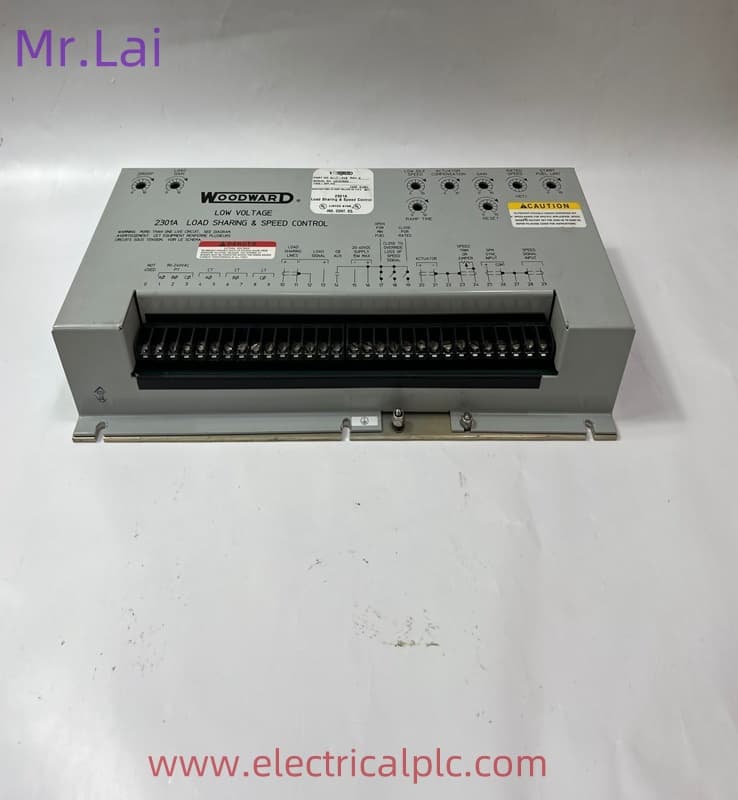
8270-201 Woodward overspeed protector
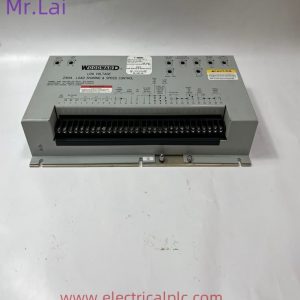
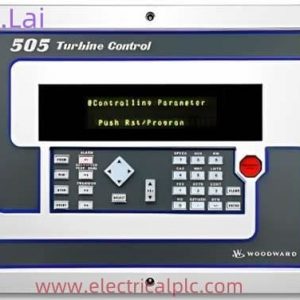
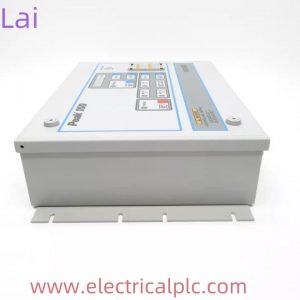
The 8270-201 is a microprocessor-based digital governor controller produced by Woodward, belonging to its classic 505 series.
It is primarily designed for speed control and protection of steam turbines. Below is a detailed introduction to this product:
I. Product Overview
- Brand and Model: Woodward 8270-201
- Series: 505 Series Digital Governor
- Type: Microprocessor-based controller
- Purpose: Specifically designed for steam turbines to control their speed and provide overspeed protection.
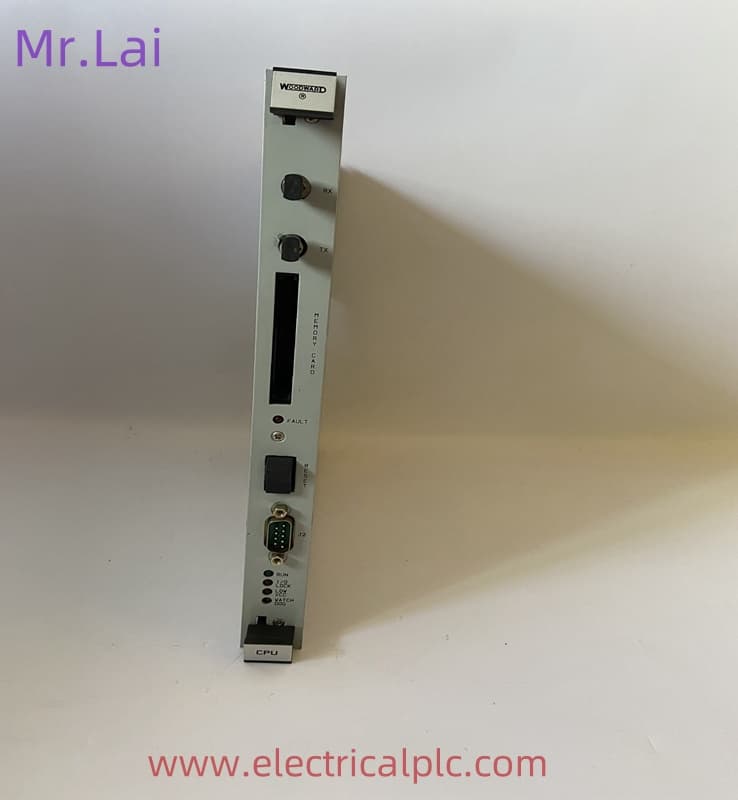
II. Core Functions
- Speed Control:
- 8270-201 Precisely controls the speed of steam turbines by adjusting steam inlet flow.
- Supports single-range or split-range actuators to accommodate turbines of different sizes.
- Overspeed Protection:
- Incorporates triple independent overspeed protection logic to ensure rapid shutdown in case of overspeed, preventing equipment damage.
- Provides an overspeed test button for convenient on-site testing of protection functions.
- Emergency Shutdown:
- Equipped with an emergency stop button for immediate shutdown in emergency situations.
- System Protection:
-
- Automatically switches control modes upon sensor failure to ensure uninterrupted system operation.
- Offers local/remote control priority selection to adapt to different operational scenarios.
-
The entire automotive industry generally believes that domain controllers are the most competitive and profitable part of the automotive electronics industry in the future, benefiting chip manufacturers and core algorithm suppliers.
(1) The driving factors behind the rapid growth of the domain controller market
More and better ADAS functions and intelligent cockpit and information entertainment functions have always been the main factors driving the rapid growth of the domain controller market.
These new functions can significantly improve the technological sense and user experience of the entire vehicle, and therefore are also the focus of investment for OEMs when developing new
models. ADAS applications between L1 and L2+levels have developed rapidly in recent years, with many functions rapidly becoming popular, such as parking assistance, lane departure warning,
adaptive cruise control, collision avoidance, blind spot detection, driver fatigue detection, etc.
A domain controller requires a more powerful and integrated main control processor as its brain. More functions that were originally implemented through separate ECUs can now be implemented on
the domain main control processor, which can save more ECU usage and other hardware resources required in the functional domain. Higher integration can meet the requirements of ADAS domain
control and related component platformization and standardization in the supply chain management of host factories.
(2) The impact on the supply chain of domain controllers
The evolution and development of automotive E/E architecture have also profoundly influenced the supply relationship between OEMs and automotive electronics suppliers. The core competitiveness
of the host factory has shifted from mainly mechanical manufacturing to focusing on software and algorithms. It is expected that there may be two cooperation models between vehicle manufacturers and Tier 1 suppliers in the future:
Firstly, Tier 1 is responsible for the hardware design and production of domain controllers, as well as the middleware software part of the intermediate layer. The vehicle manufacturer is responsible
for the autonomous driving software part. The advantage of Tier 1 is to produce products at a reasonable cost and accelerate their implementation. Therefore, it is inevitable for vehicle manufacturers to
cooperate with Tier 1 in production. The former is responsible for the autonomous driving software part, while the latter is responsible for hardware production, intermediate layer, and chip solution integration.
In this mode, when the project is approved, the vehicle manufacturer may cross Tier 1 and directly determine the chip selection of the solution with the chip manufacturer.
Secondly, Tier 1 collaborates with chip manufacturers to develop central domain controllers after integrating solutions and sell them to vehicle manufacturers, such as Continental ADCU, ZF ProAI, Magna MAX4, etc.
III. Technical Specifications
- Power Supply: 18-32 VDC, supporting 24VDC input.
- Display: Two-line x 24-character LED display for clear indication of operating status and parameters.
- Enclosure: NEMA 4X or IEC 60529 IP56 rated for protection against harsh industrial environments.
- Inputs/Outputs:
- Inputs: 6 programmable current inputs, 16 discrete contact inputs.
- Outputs: 2 actuator outputs, 8 relay outputs, 6 programmable current outputs.
- Communication Interfaces: 8270-201 Supports RS-232, RS-422, and RS-485 hardware interfaces for easy integration with host computers or other devices.
- Software: Equipped with OpView™ and 505View software for parameter configuration, monitoring, and fault diagnosis.
- Operating Temperature: -20 to +60°C (some models support -4 to +140°F).
- Storage Temperature: -40 to +85°C (some models support -40 to +185°F).
- 8270-201 Weight: Approximately 9.11 pounds (4.13 kilograms).
IV. Application Scenarios
- Steam Turbine Control: 8270-201Suitable for steam turbines of various sizes, including industrial steam turbines, small grid turbo-generators, and turboexpanders.
- Single Extraction and Admission Applications: Designed for operating steam turbines in single extraction and/or admission applications.
- On-Site Programming: Allows on-site operators to program and adjust parameters through an integrated operator control panel, adapting to different operating conditions.
V. Product Advantages
- High Reliability:
- Microprocessor-based design ensures precise control and stability.
- Triple independent overspeed protection logic provides multiple layers of safety.
- Flexibility:
- Supports various actuator and sensor configurations to accommodate different turbine models.
- Offers a rich set of input/output interfaces for easy system expansion and integration.
- Ease of Use:
- Two-line x 24-character LED display provides an intuitive operating interface.
- A 30-key multifunctional keyboard simplifies parameter configuration and operation.
- Compatibility:
- Supports multiple communication protocols for easy integration with DCS, PLC, and other systems.
- Provides OpView™ and 505View software for remote monitoring and fault diagnosis.
Woodward ship parts module debugger controller actuator generator set
5439-730 Woodward Ship Spare Parts,
8234-167O Woodward turbine controller,
8904-484 WOODWARD Debugger unit,
5464-474 Woodward Ship Spare Parts,
9907-166 Woodward Ship Spare Parts,
5463-178 WOODWARD Debugger unit,
TG-13 Woodward overspeed protector,
8230-815 WOODWARD Debugger unit,
5463-405 WOODWARD Debugger unit,
SPM-D11 Woodward ProTech 203,
NEW ASML 4022.640.59951
ASML 4022.639.86653 Class 3B ( AIGaAs ) 850um 10mW Solid state Laser Module
ASML 4022.437.2993 8 Channel Fiber Optics card SVG
ASML 4022.472.42562
ASML 4022 435 60000.4 LM-2362772 NEW ASML semiconductor 4022.435.60000
ASML TWINCSCAN SCANNER LENS ASSEMBLY 4022.656.21202
ASML GRIPPER ASSEMBLY FOR PAS 25005000 4022-451-04002 WITH 4022-435-0190
1PCS ASML 4022 192 71414 90days warranty via DHL or FedEx
Philips PG2026 CPU PCB Card ASML 4022.230.0332 PAS 50002500 Wafer Stepper
ASML 402250245116 ENCL 1000W TCU REPL BY 2500W
CYMER 05-05186 ASML 854-2343-002 SHARED MEMORY 256K PC (VL 7709B)
ASML RETICLE GRIPPER 4022 431 0150 FOR PAS 25005000
1PCS ASML 4022 268 00750 PCB 90days warranty via DHL or FedEx
ASML ICM Tool Set XXIV MAT Serv 456 05031 with PCB 086D50 PCB 394c06 DSP Siglab
ASML 2500 5000 PSCOPE CAMERA 4022.428.05233 22052358
ASML 854-9527-001 OPTICAL ASSY ALIGN TOOL qmlm 859-0028-802
ASML 854-9501-002 RETICLE, MICRASCAN III, 4X
ASML 8549525002 ADVANCED MICRASCAN III RETICLE FOCUS FLAT MSX, 193
1PS GIP25 ASML 4022 198 24924 4022 198 65041 (3-month warrantySHIP FedEx)
ASML Laser Mat: 4022.427.42562 Class 3B ( NdYVO4) ) 532nm Laser Module
ASML 4022.486.57153 ATRS XT2 SSY Coil Assembly SVG
Reviews
There are no reviews yet.